 Log in

Overdose Offsets: Why Every Bag of Fentanyl I Sell Is Net Life-Positive. “Every death on my corner is offset, with a third of a toddler left over, and I’d like that number in the conversation the next time somebody calls me a murderer…”

|
Philosophy instructor, recreational writer, humorless vegetarian.
|

Saint Paul, MN, USA


Only a few decades ago, Republican presidents would happily evoke the idea of America as a haven for people around the world. Ronald Reagan, in his farewell speech, declared that “anyone, from any corner of the Earth, can come to live in America and become an American.” Reagan was no paragon of racial tolerance—he opposed the civil-rights movement and privately referred to Black people as “monkeys”—but he did not regard the presence of nonwhite people as an existential threat to America. For years the Republican Party insisted that what it wanted was a certain kind of immigrant—highly skilled people who came here legally, or even, not that long ago, those brought to the U.S. as children who lacked status through no fault of their own and had long since assimilated.
That Republican Party no longer exists. Today the GOP’s view is that almost all immigration—by which the Trump administration seems to mean nonwhite immigration, euphemistically referred to as “Third World” immigration—is bad. That view can be summed up by Homeland Security’s celebratory announcement on X last week that the country was seeing a decline in naturalizations, as if the decline itself were self-evidently a good thing: “Net negative migration for the first time in HALF a CENTURY. Americans are amassing victories NEVER seen before thanks to President Trump.” The “right” kind of immigrant seems to have become a much narrower category, one defined not by people’s education, potential, or ties to the country, but simply by whether they are white and Christian.
A recent Fox News headline exulted: “Republican Glee Erupts as White House Boasts Sharp Decline in Immigration From Muslim-Majority Nations.” These people could be doctors, engineers, or artists, but if they’re from a “Muslim-majority country,” these Republicans don’t want them here. And this week, Homeland Security Secretary Markwayne Mullin posted that “socialists”—by which he presumably meant leftists sympathetic to immigrants—want to “vandalize American demographics to gain political power.” This is the language of racial purity, and it is not a concept that confines itself to immigration. It suggests that Americans who do not fit the Trump administration’s preferred “demographics” do not belong.
In the many parts of the United States where the native-born population is declining, communities desperately need immigrants. This is true in areas of Ohio, where Haitian immigration has contributed to an economic revival. But to President Trump, Haiti is a “shithole” country, and all Haitians are invaders to be expelled. To that end, the administration removed the Temporary Protected Status that had allowed Haitian immigrants to stay in the United States, and in July, Haitians in Ohio began being fitted with ankle monitors.
Pierre Damas Bel was in college at Wright State University in Ohio when he was issued his bulky ankle monitor. He was an athlete. And he hoped to study neuroscience and be a doctor. He was exactly the kind of young person whom previous versions of the Republican Party would have seen as an American success story. But he was a Haitian immigrant, so he was not wanted by the Trump administration, which did not seem to care who he was, or who he might become. In September, he called his father to say he felt “humiliated.” CNN reported that soon after, police told his father that he had “thrown himself under a truck.” A local pastor, Carl Ruby, said at a news conference that it was “our immigration policy that took his life.”
[Read: A reckoning in Springfield]
A year ago, The New York Times obtained documents submitted to the president by officials at the Departments of State and Homeland Security claiming that “the sharp increase in diversity has reduced the level of social trust essential for the functioning of a democratic polity,” and arguing that the U.S. should admit only “refugees who can be fully and appropriately assimilate [sic], and are aligned with the president’s objectives.”
We now know what was meant by this. The Trump administration has turned refugee admissions into a virtually whites-only program for Afrikaners from South Africa. The applications of these so-called refugees—who do not face significant levels of persecution—are being processed quickly, while those of other groups around the world have largely been suspended. The administration portrays most immigrants as people who leech off U.S. taxpayers rather than contributing, but it has supported South Africans in this whites-only refugee program at taxpayer expense.
The Afrikaner policy is illuminating, because it proves the catch-22 facing nonwhite immigrants: If you are poor, you are a moocher, and if you are gainfully employed, you are taking a job from a hardworking American. The only way to be a good immigrant is to be white and Christian.
Bo French, who is running for a seat on the Texas Railroad Commission, has taken this idea a step further, suggesting that the only way to be an American is to be white and Christian.
Last month, French responded to a photograph of Asian students cheering the University of Texas football team by posting, “I heard UT graduation this year looked like this. I didn’t believe it. The problem is now obviously far worse than anyone imagined,” adding that “social media is exposing how many Americans have been displaced by foreigners.” French later said, “I think that the bigger conversation is, are we going to have policies that prioritize Americans, and the exceptionalism that I believe Americans have, or are we going to have policies that prioritize foreigners?”
State law requires that 90 percent of UT’s students be from Texas; only 10 percent can be international or out-of-state students. French had no idea of the citizenship status of the young people in the photo. What made the students “foreigners” to French was that they were not white.
The conservative activist Christopher Rufo discussed French’s comments on a podcast with Jonathan Keeperman, who leads a book publisher of conservative titles. Keeperman explained that “the mere fact of us being able to notice that No, this is not an assimilated group, this is just a bunch of Indians at the game is itself sort of definitionally the case that they’re not yet assimilated.” What makes them not assimilated? Nothing more than the opinion of a guy who looks at a picture and sees, as Keeperman put it, “just a bunch of Indians.”
It is difficult to imagine a behavior more indicative of assimilation than rejoicing in the victory of your college football team in Texas. And that’s the point: Assimilation is no longer about going to school, getting a job, speaking English, and embracing local culture. It’s about being white and Christian.
In recent years, many conservatives have championed a kind of reactionary “color-blindness” that insists that any race-conscious effort to alleviate discrimination is itself equivalent to racial discrimination. White people earned their success, this argument assumes, but people in all other groups were given unfair advantages—a notable inversion of American history. Affirmative action has been struck down by the Supreme Court, and offices promoting diversity, equity, and inclusion have been restricted or outlawed at public universities in many states, including Texas. But the success of nonwhite people remains suspect. In fact, that success is evidence that something is deeply wrong with the system. As my colleague Jonathan Chait wrote about the Rufo and Keeperman podcast, “Resentment of these immigrant communities is understandable, the two men explained, not in spite of the fact that so many South Asians have been successful academically and economically, but because of it.” If “meritocracy” does not produce an overwhelming white majority in elite spaces such as Texas’s flagship public university, what good is it?
Color-blind meritocracy was, for many years, a successful rhetorical strategy for undermining antidiscrimination law and excluding Black people from selective schools and prominent positions. That’s why so many former segregationists seemed to suddenly embrace the concept in the 1970s. For them, resegregation—not color-blindness—was always the goal. As long as the success of some immigrants could be used to paint Black students as undeserving, color-blind meritocracy was good. But now many on the right see a new problem: too many Asian Americans in elite spaces. Their success, therefore, must be portrayed as a sinister theft of real (white) Americans’ birthright.
[Jonathan Chait: The mainstreaming of anti-Indian bigotry]
The declining “social trust” that the administration warned against is, of course, not the fault of these students. The problem is bigots like Bo French who cannot accept into their community people who do not share their race and religion, and those who monetize or otherwise profit from that bigotry by spreading it through social media. Like the proverbial child who kills their parents and asks for mercy as an orphan, they are responsible for the problem they are decrying.
Perhaps more significant than French’s remarks is that few Republican politicians in Texas were willing to criticize them. Governor Greg Abbott, who has endorsed French, distanced himself but did not condemn the remarks. Neither did Texas Lieutenant Governor Dan Patrick. Nor did Texas Attorney General Ken Paxton, who is running for a U.S. Senate seat. Senator John Cornyn, who lost the primary to Paxton, was among the few sitting Republican officeholders who did, saying French was “an embarrassment to the Republican Party, and he’s going to drag the whole ticket down because of his racist comments.” One wonders whether he would have felt free to speak so frankly had he not been primaried out of his seat.
The former Bush adviser Karl Rove, hardly a liberal squish, complained that “my party is being infiltrated by people like Bo French. Nick Fuentes goes to Dallas and meets with a bunch of Republican leaders. This guy is a Nazi.” I’m afraid that these people have not “infiltrated” the Republican Party. Today, they are the Republican Party.
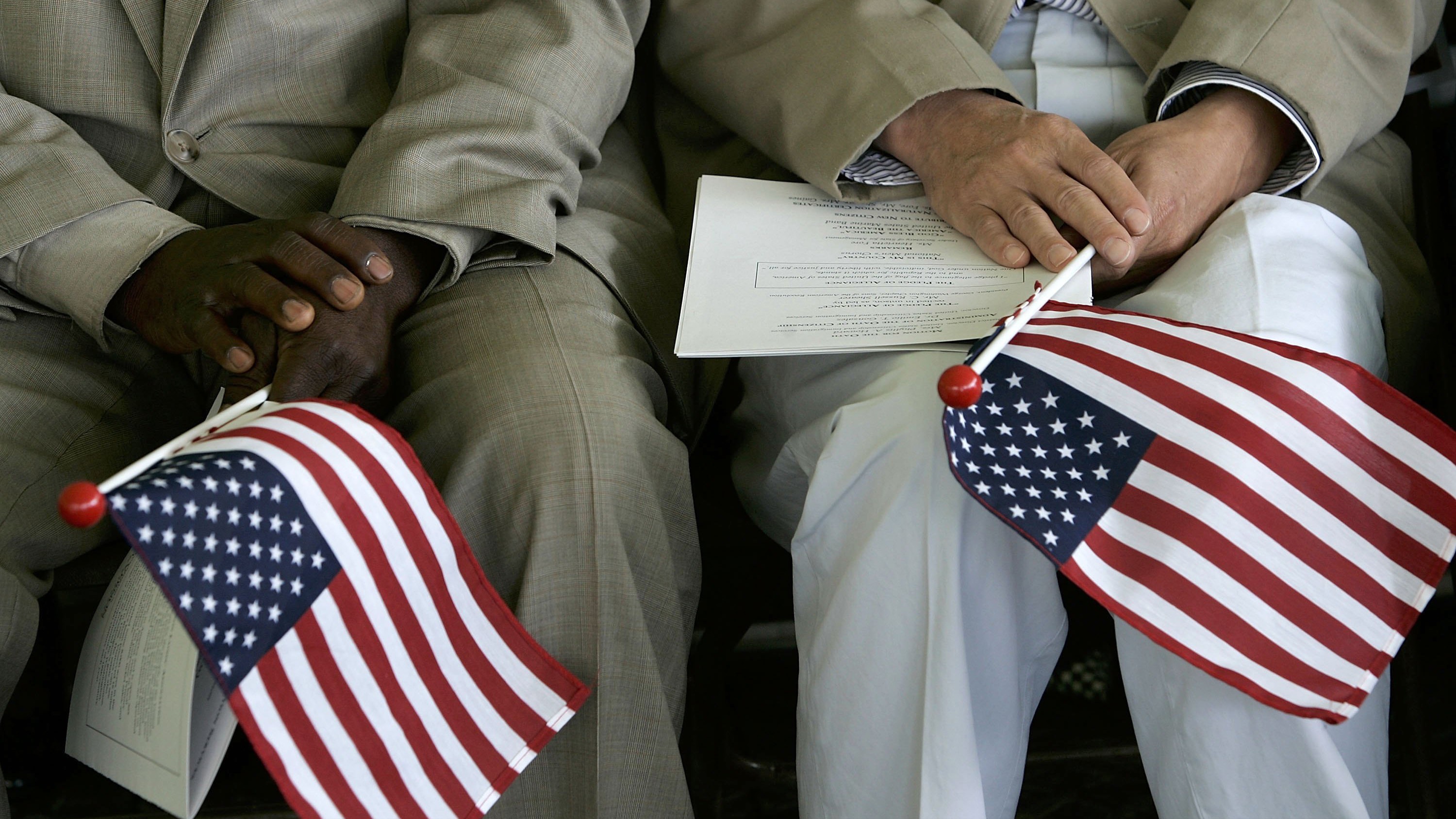

"It is difficult to imagine a behavior more indicative of assimilation than rejoicing in the victory of your college football team in Texas."
Saint Paul, MN, USA




The Comedy Wildlife Awards have announced the finalists for the 2026 competition and, well, these awards never miss. You can almost hear the background music for some of these…
Tags: best of · best of 2026 · photography
Saint Paul, MN, USA

For A.1. to cause such fear is understandable, because many of us are not comfortable with condiments.
Saint Paul, MN, USA



They could be made to accept the most flagrant violations of reality, because they never fully grasped the enormity of what was demanded of them, and were not sufficiently interested in public events to notice what was happening. By lack of understanding they remained sane. They simply swallowed everything, and what they swallowed did them no harm, because it left no residue behind, just as a grain of corn will pass undigested through the body of a bird.
Orwell, 1984
In a letter to his mistress Louise Colet, the novelist Gustave Flaubert remarked that “to be stupid, and selfish, and to have good health are the three requirements for happiness.” He then added, “though if stupidity is lacking, the others are useless.”
In all seriousness, a friend reminds me that, once all “this” is sort of over, one way of reconciling oneself to the fact that seventy-seven million people voted for Trump in 2024, after everything that had happened over the previous eight years, is that a very large percentage of those people are idiots, and consequently have never achieved the level of mens rea, as lawyers would say, to merit the consignment to a fiery pit that a more knowledgeable choice would require.
The post Glass half full appeared first on Lawyers, Guns & Money.
He lovingly paints immigrants, praises free trade and diplomacy, and rues the coarsening of American politics. Why won’t he talk about Donald Trump?
A damning sketch of a coward
Saint Paul, MN, USA
Next Page of Stories